
Four Spanish colonial churches stand along one stretch of river south of downtown, each about 2.5 miles from the next, and not one of them charges admission. That is the short case for spending a day at the San Antonio Missions, the only UNESCO World Heritage Site in Texas. The longer case is what you find once you get there: frescoes painted more than 250 years ago, a stone aqueduct that still carries water, and a farm field still fed by a colonial irrigation ditch.
Here is our self-guided plan for seeing all four in one day, in an order that keeps you moving south instead of doubling back. It suits a holiday weekend with visiting relatives just as well as a first Saturday after a move.
Before You Go: A Quick Checklist
A little prep makes the day smoother. Here is what the National Park Service lists for San Antonio Missions National Historical Park:
- Hours: the missions are open daily from 9 a.m. to 5 p.m., and the outside grounds stay open from sunrise to sunset, according to the park’s hours page.
- Closed days: Thanksgiving, Christmas, and New Year’s Day. The day after Thanksgiving is a regular open day.
- Cost: entry is free, and each mission has its own free parking lot.
- Water: every mission and the visitor center has a refill station, but the park does not sell single-serve plastic bottles, so bring a reusable one.
- Shoes: surfaces are uneven and some doorways are low. Comfortable, closed shoes earn their keep here.
- Passport stamps: all four sites have them, if you collect.
One more note on timing. The park counted 1,552,510 recreation visits in 2025, up 21.4% from the year before, though the Park Service says new traffic counters likely account for part of that jump. Either way, weekends draw a crowd, so an early start pays off.
How to See the San Antonio Missions in Order
The four missions run north to south: Concepción, San José, San Juan, and Espada. Driving the whole line from Concepción to Espada is about 6.5 miles, roughly 15 minutes on an average day, via Mission Road and Riverfront Parkway. That short hop between stops is what makes a single day realistic.
1. Open at Mission Concepción (9 a.m.)
Start at 807 Mission Road, about 3 miles south of downtown. Concepción’s stone church was dedicated in 1755 and was built directly on bedrock, so it never lost its roof. That makes it the least restored colonial building in the park, and the roof is the reason the paintings inside survived.
Look for the fresco remnants in four rooms, especially the ceiling known as the Sun Fresco in a convento room.
2. Catch a Ranger Tour at Mission San José (by 10:45 a.m.)
Drive about 2.5 miles south to 6701 San Jose Drive, home of the park’s visitor center. Free ranger tours leave the visitor center daily at 10 a.m. and 11 a.m., and a free 20-minute film plays there too. If you only make one guided stop all day, make it this one.
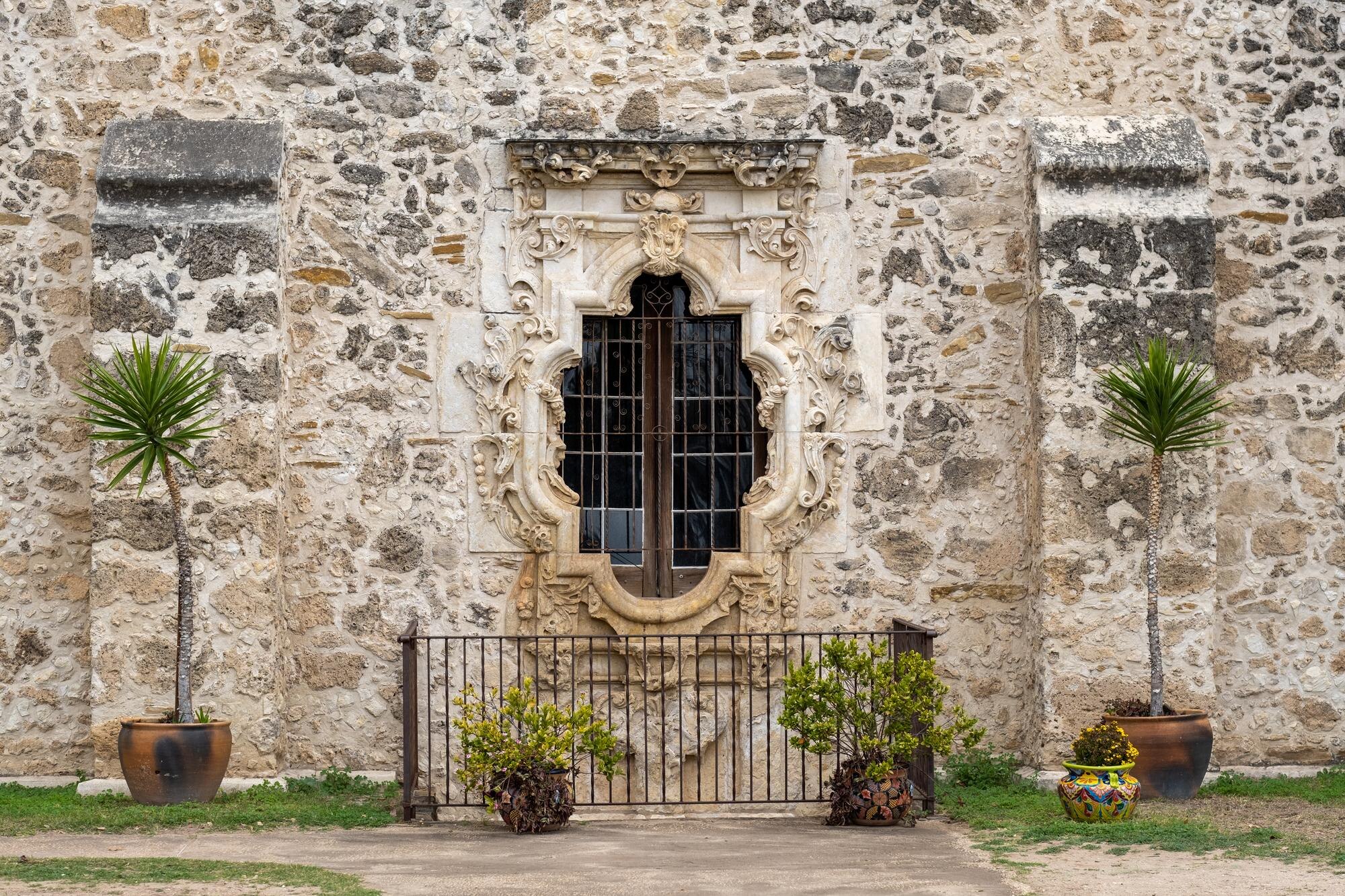
San José is the largest of the group, often called the Queen of the Missions, with founding ceremonies dated to February 23, 1720. The WPA restored it close to its original design in the 1930s, which is why the walls, family quarters, granary, and grist mill read as a complete compound. Don’t skip the Rose Window, considered the finest example of Spanish Colonial ornamentation in the country. Nobody knows for sure who carved it or what it means.
3. Break for a Picnic Along the Mission Reach
The park itself is not a dining stop, so pack lunch. The San Antonio River Authority’s Mission Reach lines this whole corridor with picnic tables, benches, grills, and drinking fountains, and it is free and open dawn to dusk. Groups can reserve one of its pavilions for a $150 daily fee.
4. Walk the Grounds and Farm at Mission San Juan
Continue to 9101 Graf Road. San Juan was reestablished here on March 5, 1731, and its stone church, friary, and granary were finished in 1756. A larger church was started in 1772 and left half built in 1786, and those unfinished walls are worth a slow look.
Two things set San Juan apart. A demonstration farm, run with the San Antonio Food Bank, is still fed by a historic acequia. And the Yanaguana Trail, a paved, ADA accessible path with a wooden boardwalk, follows an old stretch of the river where turtles and owls are common sightings.
5. Stop at the Espada Aqueduct
Just north of the last mission, the Espada Aqueduct carries water over Six-Mile Creek. Franciscans built it in the 1740s, and water still flows across the top of it on its way to Mission Espada’s fields. Give it ten quiet minutes.
6. Finish at Mission Espada
End at 10040 Espada Road, the southernmost stop. Espada’s story starts in 1690 in East Texas; it moved here on March 5, 1731, and its church was completed in 1756.

The Park Service calls Espada’s acequia system the most complete and original in the park. Ask at the contact station about the working historic loom; a ranger or volunteer can often demonstrate it.
Driving, Biking, or Taking the Bus
A car is the simplest choice, with free lots at every site. Two other options trade speed for scenery:
- Bike: the hike and bike trail links the Alamo with all four missions. It is an out-and-back route, not a loop, so budget energy for the return. Bike share stations sit at each mission, according to the park’s directions page.
- Bus: VIA Route 42 serves Concepción and San José only, so plan on another ride to reach San Juan and Espada.
If the trail sounds appealing, our guide to the Howard W. Peak Greenway trails covers where else in the city to ride or walk.
Why the Missions Feel Different When You Live Here
Visitors see the missions once. When you live here, they become part of the weekly map: a Saturday ride on the Mission Reach, a ranger tour when relatives visit, a morning walk on the Yanaguana Trail. All of it is free.
That ease reaches well past the south side. From homes in Alamo Heights or the Stone Oak area, the trip runs south through downtown, which makes a morning at the missions an easy add to a weekend. For more of the backstory, our look at San Antonio’s history traces how these missions shaped the city, and our list of essential San Antonio experiences picks up where this plan ends.
San Antonio Missions FAQ
Do the San Antonio Missions charge admission?
No. San Antonio Missions National Historical Park is free to enter, and the National Park Service lists free parking at each of the four mission sites. Free ranger tours and a free 20-minute film are offered at the Mission San José visitor center.
Are the San Antonio Missions open the day after Thanksgiving?
Yes. The San Antonio Missions close only on Thanksgiving, Christmas, and New Year’s Day. On other days the missions are open from 9 a.m. to 5 p.m., and the outside grounds are open from sunrise to sunset, according to the National Park Service.
How far apart are the San Antonio Missions?
Each mission is about 2.5 miles from the next. The National Park Service puts the drive from Mission Concepción to Mission Espada at about 6.5 miles, roughly 15 minutes on an average day, using Mission Road and Riverfront Parkway.
Can you bike between the San Antonio Missions?
Yes. A hike and bike trail along the San Antonio River connects the Alamo with Mission Concepción, Mission San José, Mission San Juan, and Mission Espada. The trail is out and back rather than a loop, and bike share stations sit at each mission site.
Your Next Step
A day at the missions tends to change how people see this city: older, greener, and more lived in than the skyline suggests. If that day has you thinking about a home base of your own, start with our San Antonio relocation resources, then browse San Antonio homes for sale when you’re ready to look. You can also call our team at (210) 492-9703, and we’ll help you sort out which parts of town fit the weekends you want.