Option Period in Real Estate Contracts

Termination - Option Period - Real Estate Contracts

The option period in the Texas “One to Four Family Residential Contract (Resale)” is one of the greatest protections for buyers built into real estate contracts. It is simple and easy and provides buyers with a chance to terminate the contract with no risk and little financial loss. But what exactly is its function and why do you need to use this when making an offer on a home?

Section 23 – Termination Option

Termination - Option Period - Real Estate Contracts

As you can see, there are three negotiable points to this paragraph – time, money, and whether or not that money will be credited back to the buyer at closing. These three points can be anything – or the entire paragraph can be skipped (and the option period waived, although we don’t recommend it).

The purpose of the paragraph is to provide the buyer with the unrestricted right to terminate the contract. The unrestricted right simply means that the buyer doesn’t need a reason to terminate the contract – they have the option to terminate the contract for any reason. Typically, it is used to give buyers time to inspect the home, and negotiate any repairs they might want done to the home before they continue on with the purchase.

The time and money provisions of the option period are completely up to the buyers and sellers. Typically here in San Antonio you will see a request for 10 days for $100. The option fee check (in this case $100) is written by the buyer directly to the seller. When the contract is agreed upon, the seller may cash the check immediately. The choice that the money will be credited back to the buyer at closing is usually the preferred checkbox at the end of the paragraph.

Once the option period begins, buyers may perform inspections on the home to determine if there are any necessary repairs. The seller does not have to agree to do those repairs, so it becomes a negotiation point once again. If both parties can not come to an agreement during the option period, the buyer may elect to use their unrestricted right to terminate the contract with no penalty other than the loss of the option fee (which they paid directly to the seller). The buyer may also cancel the contract just because they feel like it or because they realize they don’t like the home or because it’s a Tuesday – basically, for any reason. All they lose is the option fee (in the case mentioned above, $100). They do not risk losing their earnest money if the terminate within the option period.

Option Period – Protect Yourself

The option period and the protection it provides are very useful in real estate contracts. Have you ever heard of “buyer’s remorse” – it’s a real thing and we have seen it happen before. Even without a reason like that, the option period is essential when getting inspections – it allows for time for them to be done as well as time to negotiate what repairs the buyer may want the seller to do. Do yourself a favor and be sure and get an agreed upon option period when buying a home – without out it, you have one less way you can terminate the contract if you are not happy with the home.

Note: Many bank-owned homes or those involved in relocation will not provide an option period. Many however will provide an inspection period which functions in the same basic way. Always read the related addenda to a contract (your agent should point these out – if not, you need a new real estate agent) and know what all your options are for potential termination of the contract – not that you want to cancel, but there’s always a chance something will pop up that you may need to cancel.

image of contracts courtesy of the Texas Real Estate Commission

Happy Birthday Sharon Simon!

Sharon Simon

If Sharon Simon is in the office, you can guarantee you’ll hear laughter. Sharon has a great sense of humor and loves sharing interesting stories from her career as a real estate agent – she’s been there, done that. As today is her birthday, we’ll be sharing our favorite Sharon stories around the office (don’t worry Sharon, we won’t say anything bad, I promise). From The Howell Group and the agents and staff of Kimberly Howell Properties we’d like to wish Sharon a happy birthday and many more fruitful years as a San Antonio real estate agent.

Home Inspection: Do I Need One?

Home Inspection

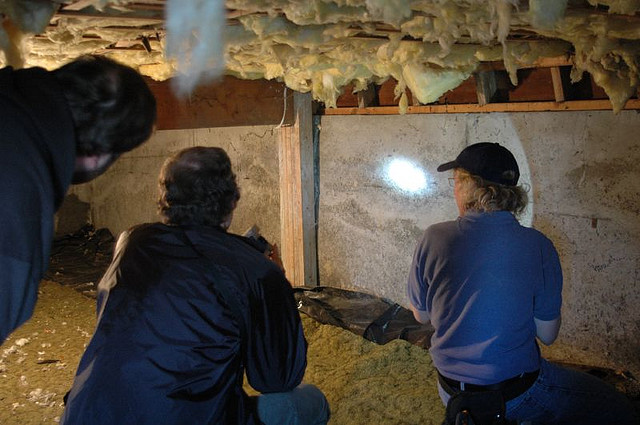
The simple answer? Yes. Home inspections are an important step in the home buying process, but one that many home owners (and sellers) wish they could skip because of the cost – an average home inspection ranges from $300-500 and varies based on size of the home and optional equipment such as pools, type of foundation (pier and beam will cost more), and sprinkler systems. Although everyone is trying to save money when buying a house, the home inspection is a step you should never skip.

A home inspectors job is simple; inspect the property and write up a report based on their findings. These reports include not only what is wrong with the home and may require attention, but also will note any “deficiencies” in the home. Typically, this will include things that are not up to current building codes. Although the word deficient will often catch the buyer’s attention, some of these things are more noteworthy than repair-worthy (your agent, along with the inspector can help you understand which is which).

An excellent home inspector will take their time during the inspection and point out things as they go along…this can be a great help after you move in and wonder where the water shut off valve is located. By following the inspector as he goes through the steps of the home inspection, you can often gain a sort of “how to” manual for the basic systems of your home.

Once the home inspection report is delivered to you and your agent, if you have elected for an “option period” in the contract, you can now discuss potential repair requests you will make of the seller. Remember, the seller doesn’t have to make the repairs, but you also (with the option period in place) have the right to terminate the contract and move on. It becomes a negotiation between the two parties – so determine what matters to you most and be prepared for some give and take (and know when to stand your ground as well).

Building a new home?

One of the biggest mistakes we see being made by buyers of new homes is their refusal to purchase a home inspection from a licensed inspector who is not affiliated with the builder. Builders do inspections on their homes as they build them and will often talk about their ten or more step inspection process. However, these inspectors are brought in by the builder. Who do you trust more? Someone on the builder’s payroll or an independent third party who works for you?

When getting a home inspection for a new home, you should opt for a phased inspection as well. These inspection cost somewhat more, but this allows you to inspect the property as it’s being built and at various stages of the process. This allows you a bit more insight into the home as you can inspect things like plumbing, slab, and electric before walls and floors go in (which often cover up any potential problems).

They may cost extra money, but home inspections are one of the smartest investments in your home-to-be that you can make. While you’re at it, throw in a wood destroying insect inspection (also called a termite inspection) to check for active infestations as well as conditions conducive to infestation. A few dollars extra will give you peace of mind (and most banks will require them).

image courtesy of justinbaeder

Appraisals, Assessments, and Fair Market Value

Number Three

The words appraisals, assessments, and fair market value all relate to one of the most common questions in San Antonio real estate – “what is my home worth?

These three terms often get jumbled up and misused, which can lead to a lot of confusion over what the value of a home is. So let’s take a look at the three terms and how they relate to real estate and the value of your home.

Appraisals

We’ve discussed appraisals recently, including a post about appraisals and why you need one and some of the positive and negative sides to appraisals. Appraisals are part of the mortgage process (and you should get one for yourself if you’re a cash buyer) – the lender uses the appraisal report to help underwrite the loan. The lender wants to know that an appraised value is equal to or more than the price you have agreed to pay for the home.

Appraisals are performed by licensed appraisers who receive a lot of training. Since the housing market crash, appraisers have become rather tight with their valuations, which can be quite daunting for both home buyers and sellers (lenders will not loan more than the amount of the appraisal).

Assessments (Tax Assessed Value)

I often hear tax assessed values called appraisals. It’s kind of a tricky set of words. The office that handles them, is called the Appraisal District, but for the purpose of clear definition, these should not be confused with appraisals. Tax assessed values are used by your local country to assess the amount of tax you owe on your property.

These assessments are not a good indication of value – although they can be dead on at times. With Texas being a non-disclosure state (final sold price of a home is not disclosed publicly), these tax assessed values can vary widely. There are cases where people protested their taxes and cases where the neighbor didn’t, creating disparity in taxable values on properties that may be very similar. Basing your listing price or (if you’re a buyer) your offer price on these numbers is not a good idea. Tax assessed values are good to periodically check, to be sure your property taxes are not increasing too much (if they are, you can protest your taxes here in Texas).

Fair Market Value

Fair market value is a valuation of your home based on current market trends and the actual physical value of your home. While appraisals are rather scientific in nature, fair market value is part science and part art. Your real estate agent takes into account all the information and knowledge they have on your neighborhood and your home and performs a CMA (comparable market analysis) to determine fair market value. Based on current sales trends and the details of your home, your agent will give you a price to list your home at (based on the fair market value).

As we’ve seen in recent years, the price of a home can change and move both up and down. A home purchased today may sell for more, less, or the same in the future – this future price is its fair market value at that moment in time. Even when a fair market value is set for your home, you may find that you still need to adjust the price of your home in order for it to sell.

You may also want to read Dave Taylor’s article on cost versus market price in homes sale.

image courtesy of Studio Mohawk

It’s Rick Jorgenesen’s Birthday!

Rick Jorgensen

When it comes to enthusiasm, few people can match Rick Jorgensen. So with that in mind, we’d like to wish him an awesome birthday (and a happy New Year while we’re at it!). Rick always makes a few minute to drop by my desk and discuss current real estate news and I always enjoy talking to him about new ideas and thoughts of ways to improve our industry. On this day, however, I hope Rick takes off his thinking cap and dons a festive party hat – have a good one Rick, you deserve it!

Appraisals: The Good, The Bad and The Ugly

Home Scale: Appraisal

Now that we’ve covered the basics of appraisals, it’s time to talk about some of the positive and negative aspects of appraisals. Appraisals, without a doubt, are a good idea. Without them, the potential for mortgage fraud would be rampant and housing prices would more than likely inflate at a rate that the average consumer would never be able to keep up with.

The Positive Side of Appraisals

Think of appraisers as a disinterested third-party. They have nothing to gain or lose (they get paid either way) for coming up with a certain value on a home. Their main function is to be sure that the sellers, buyers, and agents are not colluding (or acting alone) to take more money for the house than it’s worth. The lender is giving the buyer a lot of money and they are taking every precaution to ensure that they don’t lose money on the transaction (like any business, their goal is to make money).

Before the housing crisis, appraisers were much less restricted than they are today. Sadly, there were some appraisers that took advantage of this and they were a piece of the puzzle that helped decimate the housing market.

The Negative Side of Appraisals

After the housing market crash, appraisers took a lot of heat for overvaluing properties nationwide (and especially in some of the more famous crash-markets such as California, Florida, and Nevada). By overvaluing properties, lenders were able to justify larger and larger prices for homes and as housing prices continued to inflate, the bubble was just waiting to burst.

Since the crash, appraisers have had to perform under tighter standards than they were used to. This has in many cases has had a negative impact on appraisals. Homes that should appraise (or meet value) are not appraising and buyers, sellers, and agents are at times frustrated and at a loss. It’s not uncommon for an appraisal to scuttle the sale of a home these days.

The basic reasoning is that lenders have placed a lot of blame on the appraisers and make them more responsible for “erroneous” appraisals. If they overvalue a property, they risk losing the banks business if the home were to foreclose and be found to be valued at a lesser price. This sets up a dangerous situation where appraisers are afraid to value a property too high, so they may just undervalue the property for safety’s sake.

If you’re buying a home for $100,000 and the appraisal says the home is only worth $90,000, it’s up to you and seller to come to terms (lowering the sales price) or you to make up the $10,000 difference…or back out of the deal. None of these are good situations, so you can see how an undervalue appraisal is something most people don’t want to see.

The problem gets worse when an agent receives an appraisal and can see clearly that the appraiser knows little about the area – we’ve seen houses that were undervalued by as much as $100,000 in our office. Looking through one recently, it was clear that the comparable sales the appraiser was using were horrible choices (the idea behind comparable sales is to find homes that sold recently that are comparable in size, use, and style (ie, you wouldn’t compare a two bedroom home with vinyl siding to a fifeteen bedroom mega-mansion)). Although you can try and protest an appraisers ruling, it is very rare to see it make any difference.

When these situations arise, it can be very frustrating for all parties involved and it’ll definitely help you to have a good agent at this point, as the contract is now in danger of falling apart (no loan more often than not means no purchase). Some remedies can be performed to try and get both parties back to the negotiating table, but it can be tough. I know several agents who have kept a transaction alive during this period, but it takes experience and determination, so be prepared.

image courtesy of Images_of_Money

Happy Birthday Linda Mosse!

Linda Mosse

Happy Birthday to Linda Mosse, one of our San Antonio real estate agents and a member of The Howell Group. Linda’s got some serious education credentials and used to be in the Air Force (which I didn’t know about her until writing this). Her two daughters are two of the cutest kids on the planet and I love when they come to visit, because they keep me laughing throughout their whole visit. Linda leads a busy life running around with those two girls, but she makes time to be a great agent at the same time. I have a lot of respect for anyone that can balance both. So happy Birthday Linda! We hope you get some good family time and relaxation today.

Appraisals: What are they and why do I need one?

Home on a Scale

If you’re buying a home, you’re going to hear the word appraisal more than a few times. Knowing what one is and why you need one is pretty important, as is knowing some of the pros and cons of appraisals. Appraisals have been a very big issue with transactions lately, so with that in mind, I thought I’d take some time to talk about them and what they mean to you…as a buyer and a seller. For this first post, let’s just limit ourselves to what appraisals are and why they are necessary. Please note, when I use the word appraisal, I am not talking about what many people mistakenly call “tax appraisals” – we’ll need to cover that in an entirely different post.

What is an appraisal?

An appraisal is defined by Merriam-Webster as:

: an act or instance of appraising; especially : a valuation of property by the estimate of an authorized person

In the case of homes, a licensed appraiser is called on by the lender to value the home. This appraisal is then used by the bank to justify the cost of the home and back up their findings that determine whether or not they will make the loan to the buyer.

The actual appraisal process involves taking local comparable sales and area conditions in order to come up with a appraised value. This is similar to the process your real estate uses when determining the fair market value of your home when you put it on the market, but involves additional factors and considerations and must be done in compliance with appraiser licensing laws.

Why do I need an appraisal?

If you’re buying a home that involves a mortgage, you will need an appraisal. The appraisal is the bank’s proof that the home is really worth what you’ve agreed to pay for it. The idea is to give them the comfort of knowing that the home is worth that much and they’re not getting scammed or ripped off.

Banks will require an appraisal and if it comes in lower than the price you’ve agreed to pay for the home, the bank will not lend you more than the appraised value. For instance, if you’ve agreed to buy a house for $100,000 and it appraises for $99,000, the bank will only make the loan based on the $99,000 figure, so it would be up to you as the buyer to come up with the additional $1,000 in cash on your own or back out of the sale. This can become an issue as we will discuss in an upcoming blog post. The idea of appraisals is safety, security, and fair value for all involved.

Recently, appraisals have become a hot button issue, as appraisers are being much tighter with their values – this can be both a good thing and a bad thing, but much of it results from the housing market crash. We will get into that as well in the upcoming post(s).

image courtesy of Images_of_Money

Open House Luncheon at 4215 Moonlight Way

4215 Moonlight Way - San Antonio 78230 - Woodland Manor

We love to showcase our homes with open house luncheons, so we’re going to do another one! This time, we’ll be showing 4215 Moonlight Way, a custom built, Austin stone home with incredible amenities. Come join us Thursday, July 19th from 11:30AM to 1:00PM – tour the house, grab a bite to eat or a sip to drink and talk with some of our agents. Not only will you love the home, but you’ll love the people we work with. So let’s go San Antonio, what are you waiting for?

Why is my listing on your site?

MLS Listings and IDX

This morning a received an email from a not-so-happy agent from another brokerage. They had found one of their listings on our website and wanted to know how this was possible as they had “not given us permission” nor was it “permitted by SABOR” [SABOR is our local real estate association that owns and operates the MLS]. Of course, I knew why the listing had appeared and knew that neither of these assumptions were true. In fact, the agent had given us permission and it was well within the “MLS Rules and Regulations” of SABOR for us to be showing this property on our website.

Now here’s what bothers me. I’m a nerd, I freely admit that. I tinker and toy with websites and IDX all day long looking for new ways for our company to grow and expand. So yes, I pay attention to these things more than most, but for agents not to understand or be aware of IDX in this day and age is shocking to me. I urge all brokers to sit your agents down and explain it to them, because this is a major component to your business today.

What follows is my response to the agent, edited to remove any reference to their name or their company. Hope you enjoy it (and perhaps those brokers that still haven’t taught their agents about IDX can use it as a teaching aid).

Dear agent, this explains it all.

Hi, my name is Matt and I am the web-nerd for Kimberly Howell Properties. I received your email via our system in reference to your listing at [redacted] informing us that you did not give us permission to post your listing on our site. You also mentioned that SABOR does not approve of it. You found it on our site at the following link: [redacted]

Your property is appearing on our website – www.kimberlyhowell.com – via syndication through IDX (Internet Data Exchange). You may read more about IDX and what opportunities it provides at www.sabor.com/index.php/mls/rules-a-regulations.html (See MLS Rules and Regulations, Page 2, Section 18 – Internet Data Exchange (IDX)). Via IDX, we are able to list and show virtually any property that is listed on the SABOR MLS. Via a contract (provided by SABOR) between us, SABOR, and Diverse Solutions (the company who provides us with our IDX solution), we have the ability and express permission of SABOR to show these listings on our website. SABOR provides the MLS data to Diverse Solutions and they in turn for a fee provide us with the tools to make these listings appear on our website.

There are two main ways for a property to not appear on our website (See MLS Rules and Regulations, Page 2, Section 18.1 – Authorization). One is a blanket refusal of participation in IDX by the broker, which your broker, [redacted], does not have (I know this only because of the amount of properties we have of yours that appear on our site). The other method, is a listing by listing method. This can be done via the MLS during listing data entry. The “Media” tab of the MLS input now contains two drop downs – “Display Listing on Internet” and “Display Address on Internet.” By marking “Display Listing on Internet” as “NO” you would be able to keep your listing off of the internet via IDX (and if I remember correctly all syndication – ie, it won’t appear anywhere). There are also checkboxes for these on the newest version of the Residential Real Estate Listing Agreement Exclusive Right to Sell (TAR-1101, Revision 3-02-12, Page 5, Paragraph 11. Broker’s Authority, Section B). If for some reason you have checked these boxes on your listing, then you will need to speak to SABOR directly about the issue as your data is still being pushed out via IDX.

A quick google search for [redacted] brings back an impressive amount of results (about 1.16 million, although many of these probably can be discounted as there is more than likely more than one [redacted] in the US). You can review the results yourself at: [redacted]

As you can see there are the usual results (the big aggregators – Zillow, Trulia, and REALTOR.com) as well as many small syndicators (movoto.com, homes.com. etc.) and even some brokerages and agent sites (your personalized results will vary but I see [redacted] as one of them). In this case, I’m not even finding us on page one…or the [redacted] site. Because of the dearth of results, I’m going to venture a guess and assume you have not given a refusal to participate via the “Display Listing on Internet” drop down menu in MLS. Of course, this would be the quickest and easiest way to scrub your listing from the internet, although it would still take a few days to really see the effects (SABOR has a minimum requirement of IDX feed updates of every three days – we update a lot more often however).

I hope this helps explain IDX a bit and helps you understand why your property appears on our site. It’s actually a rather common practice and is growing in size every day. We here in San Antonio are a bit behind the curve when it comes to implementing the IDX systems for broker and agent websites if you ask me, but I’m seeing it more and more and I welcome the change. With people using the internet more and more, it makes sense to make properties available on other sites, after all, the goal is to sell the property, and the more people that can view it, the larger the pool of potential buyers.

If there’s anything else I can do to help your understanding of IDX and its uses, please let me know.

I also highly recommend this article by Jay Thomspon (The Phoenix Real Estate Guy) on the subject. Although he is dealing with a different MLS (ARMLS in Arizona), the story is quite the same. Jay is widely regarded by many as the Godfather of Real Estate Blogging and is a highly sought after speaker on the subject (and many others) at many events across the nation.

Open House – Today at Vidorra Condominiums!

Vidorra - Living Room

Don’t let the rain get you down, just head downtown to our fantastic unit at the Vidorra Condominiums (215 Center Street, #1008) today, June 10th from 11:30-1:00PM, and see this incredible two bedroom, two bath luxury condo with spectacular views. As always, your hosts, Kim Howell and Lisha Spellman, will be there to answer questions, show you around, and provide some food and beverages. San Antonio often gets its real estate reputation from the suburban housing boom, but an influx of money and energy into downtown San Antonio have revitalized it as a trendy, hip urban center. This condo is just minutes from the Riverwalk, Culinary Institute of America, Pearl Brewery, live music venues, museums, theatres, and all kinds of fantastic eateries.

San Antonio #13 on Best Places for Business and Careers List

San Antonio - Great for Business

Forbes.com used to think of San Antonio as the obese, poorly dressed, and sweaty city deep in the heart of Texas, but these days, Forbes has been taking note. This time around, Forbes.com released its list of the “Best Places for Business and Careers” and San Antonio makes an impressive appearance at #13 (out of 26 cities profiled). I think anyone who lives here would agree, San Antonio has been growing and progressing a lot lately and to see the recognition on a Forbes list is always a nice touch!

image courtesy of StuSeeger

San Antonio real estate and property information provided by Kimberly Howell Properties. Kimberly Howell Properties does not assume any liability or responsibility for the operation or content of any of the linked resources, nor for any of the interpretations, comments, graphics, or opinions contained therein. All information deemed reliable, but not guaranteed. KJH Properties, Inc. is a licensed real estate brokerage in the State of Texas, Equal Opportunity Employer, and supporter of the Fair Housing Act.